
Land as Power
The Last DuelFiefs operate as economic assets, family inheritance, political rewards, and the material language through which the principal rivalry is expressed.
increasing Bearing strength in each event
 decreasing
Bearing strength in each eventdecreasingLand Sustains Lordship
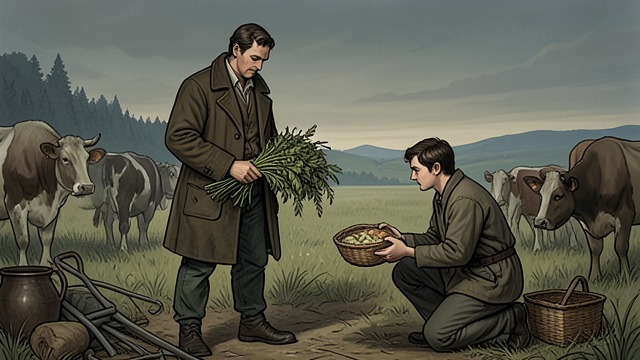
Land Sustains Lordship
Wealth and obligation
Land provides crops, rents, military service, and status. A lord’s power and a vassal’s livelihood depend on the same property.
Inheritance defines the future
A nobleman seeks to pass land to legitimate heirs. Jean’s anxiety about succession reflects the social structure rather than personal ambition alone.
Patronage Through Aunou
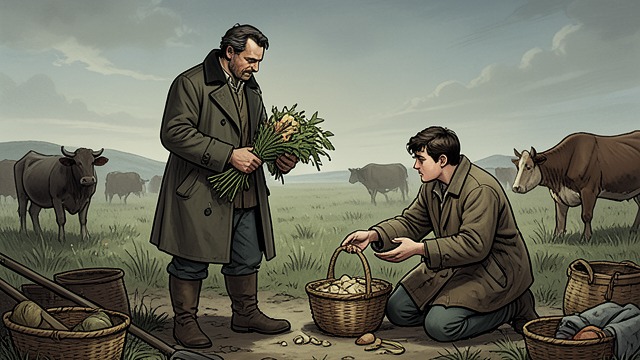
Patronage Through Aunou
A gift with political meaning
Count Pierre grants Aunou-le-Faucon to Le Gris, rewarding service and reinforcing their relationship. The fief is both an income source and a public sign of favor.
Envy becomes legible
Jean’s resentment takes material form in a specific estate. Their rivalry is not abstract: land gives it measurable value and a legal history.
Dowry and Inheritance
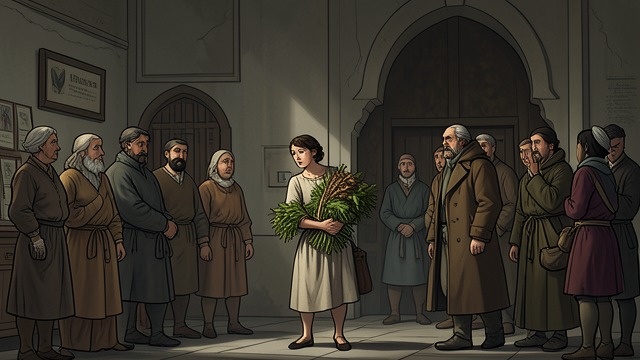
Dowry and Inheritance
Marriage as property transfer
Marguerite’s marriage brings Jean wealth and the prospect of future lands. The arrangement ties her personal future to an estate that can support a dynasty.
A missing parcel
Aunou is already outside the transfer because her father sold it. The omission makes the dowry a reminder of what Jean believes he has lost.
Property Disputes Multiply
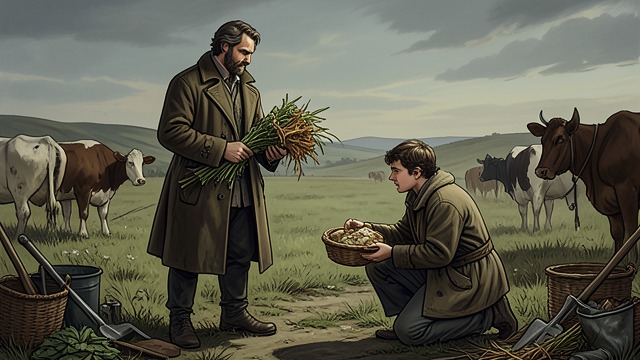
Property Disputes Multiply
Offices and estates
Jean loses the Bellême captaincy and must yield Cuigny and Plainville. Each decision weakens his material position and standing at court.
The land becomes personal
Jean interprets repeated losses as evidence that Le Gris is advancing at his expense. Property disputes intensify an existing rivalry and encourage suspicion.
Victory Without Possession
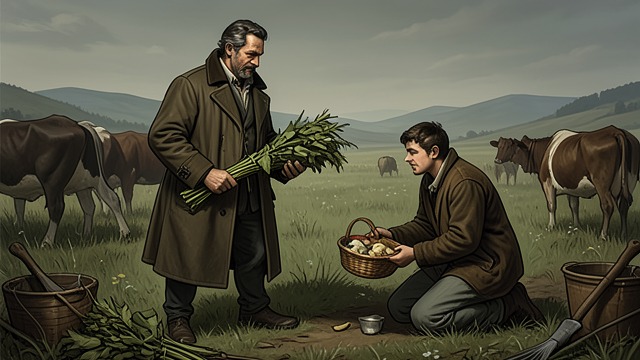
Victory Without Possession
The estate remains disputed
Jean’s duel victory does not bring Aunou-le-Faucon into his hands. The Parlement sustains Count Pierre’s claim despite the squire’s death.
Material limits of honor
Jean gains pension and royal standing, but the land remains beyond him. The contrast shows that symbolic victory cannot undo established property rights.
Fourteenth century
1378
Spring 1380
1382–1383
January 1389
